Choosing the right material for your driveway comes down to balancing what you want to spend today with how much maintenance you are willing to handle tomorrow. If you are living around here in Madera, you already know our Central Valley climate does not do any favors to outdoor building materials. We see scorching summer highs that can turn weak pavement soft, alongside expansive clay soils that shift when things get dry. Madera Diamond Asphalt breaks down how asphalt and concrete stack up against each other so you can make the right call for your property in Madera, CA.
Upfront Costs and Installation
When you are looking at the initial installation price, asphalt almost always wins the cost battle. You will generally pay less per square foot for asphalt paving than you would for poured concrete. That lower price tag comes from a faster installation process and cheaper raw materials. At Madera Diamond Asphalt, we can usually grade, prep, and pave a standard residential driveway in just a couple of days. Concrete takes longer to prep, requires more extensive framing, and demands a slower, more careful curing process. If you need a large surface area covered without draining your savings account, Asphalt Installation is hard to beat for homes in Madera, CA.
Durability in the Central Valley Climate
Here is where things get interesting because our local weather plays a massive role in how these materials age. Concrete is rigid. It handles heavy vehicle loads without flinching and will not soften up when July temperatures cross the triple-digit mark. But that rigidity is also its weakness in our clay-heavy soil. When the ground shifts and expands under a concrete slab, it cracks—and once concrete cracks, fixing it cleanly is tough.
Asphalt, on the other hand, is flexible. It handles minor ground movement without snapping right away. That flexibility is a huge asset in Madera neighborhoods where the soil expands and contracts through the seasons. However, asphalt has an arch-nemesis: intense UV rays. That relentless summer sun bakes the natural oils right out of the binder, which is why sealcoating is so important down the road.
Maintenance Requirements
- Asphalt needs a fresh sealcoat every few years to lock in moisture and block UV damage.
- Concrete does not need sealcoating nearly as often, but cleaning oil stains off it is a nightmare.
- Cracks happen to both, but filling an asphalt crack with hot-pour rubber is a quick, inexpensive DIY or contractor job.
- Cracked concrete usually means tearing out entire sections if you want it to look normal again.
Appearance and Long-Term Value
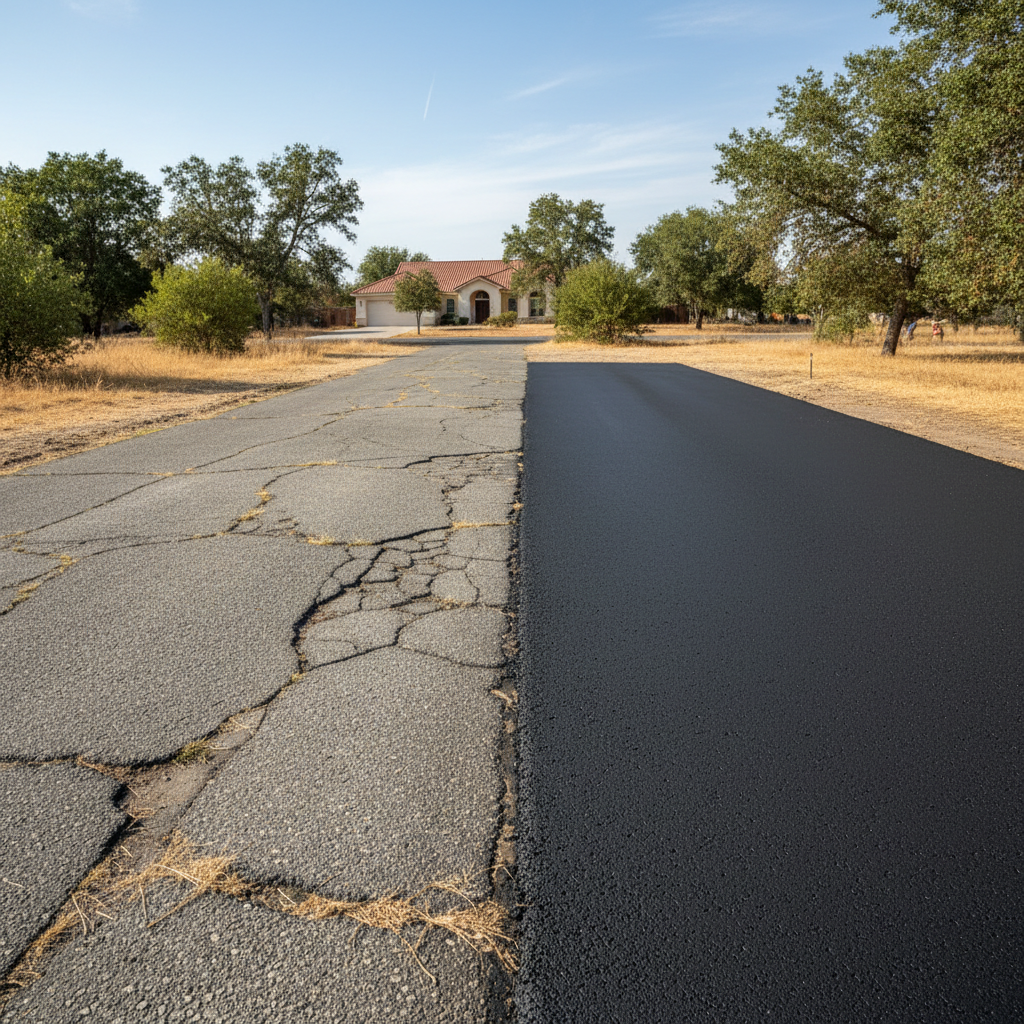
Concrete starts off looking bright and clean, though tire marks and engine oil will stain it permanently unless you seal it right away. Over decades, it might get grungy. Asphalt gives you that classic, rich dark look right after installation, especially when it is freshly rolled. As it ages, it turns a lighter gray, but a good maintenance routine keeps it looking sharp and well-kept.
If you want the lowest upfront price and a surface that rolls with the punches of our shifting Valley soils, asphalt is usually the smartest choice for Madera homeowners. Madera Diamond Asphalt provides Asphalt services for homes and businesses in Madera. Weigh your budget against how you plan to maintain it, and you will end up with a driveway that serves you well for decades.