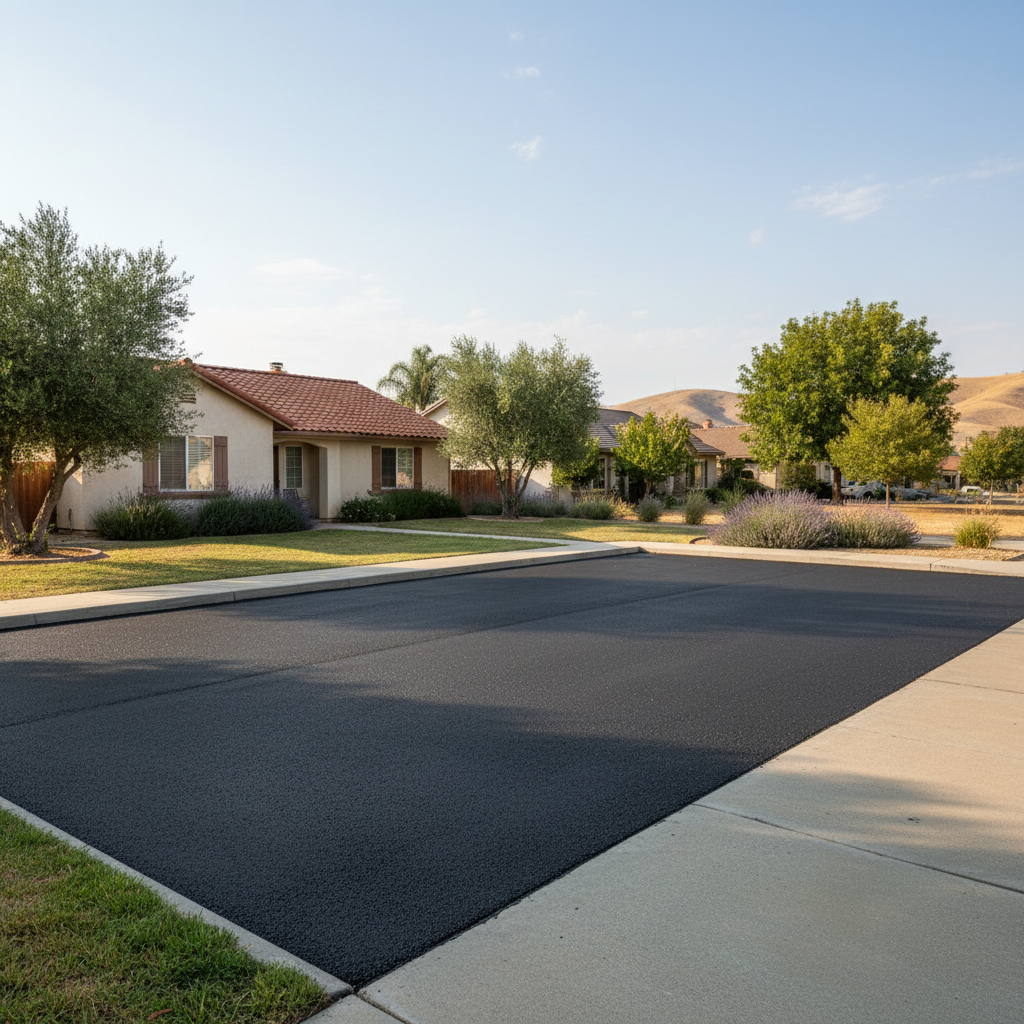
Alright, let's talk about commercial asphalt right here in Madera. If you're running a business, you already know a good parking lot or access road isn't just about looking nice. It's really about safety, making things easy for everyone, and giving off a great first impression. But when it comes to getting it paved, the first thing people always ask is, "How much is this actually going to cost me?"
The truth is, there's no single price tag for commercial asphalt. It's not like buying a gallon of milk, you know? Every project has its own unique twists, especially with our Central Valley soil and how our weather swings wildly from super hot summers to really wet winters. I've seen it all, from small office park lots to huge industrial yards near Highway 99, and the costs can really jump around. Still, I can give you some actual numbers and explain what factors truly push those prices up or down.
What Really Drives Commercial Asphalt Costs?
You might think it's just about the square footage, right? Well, not entirely. Sure, size is a big piece of the puzzle, but several other things play a huge role in your final bill. Understanding these helps you budget smarter and makes sure you're comparing apples to apples when you get different quotes.
Project Size and Scope
This one's pretty straightforward: bigger projects generally cost more overall. But here's an interesting twist – the cost per square foot often drops for larger jobs. That's because we can spread our mobilization costs (getting equipment and crews to your site) over a much bigger area. So, a small 10-car lot might actually have a higher per-square-foot rate than a massive shopping center parking lot.
The scope also really matters. Are we just putting a fresh layer over existing pavement (that's called an overlay), or are we digging out everything and starting from scratch (a full-depth installation)? An overlay is usually more budget-friendly if your base is still solid.
Site Preparation and Existing Conditions
This is probably the biggest wild card out there. If your site needs a ton of work before we even lay any asphalt, that's definitely going to add to the cost. Just think about it:
- Excavation and Grading: If the ground isn't level, or there's old, crumbling pavement that needs to go, we've got to bring in the heavy machinery. Removing old asphalt and re-grading takes time and effort, no doubt about it.
- Subgrade Condition: The dirt underneath everything is your foundation. If it's unstable, drains poorly, or we're dealing with Madera's expansive clay soils, we might need to stabilize it or bring in new base material. Doing this prevents future cracking and potholes.
- Drainage: Good drainage is absolutely critical, especially with our winter rains. Water is asphalt's worst enemy. If your site has poor drainage, we'll need to install or improve systems like catch basins, trench drains, or proper grading to direct water away. This stops water from seeping into the base and ruining your pavement way too soon. The City of Madera even has its own guidelines for stormwater management.
Asphalt Material and Thickness
Not all asphalt is made the same, you know. Commercial pavement has to handle much heavier loads than a residential driveway. A parking lot for a retail center near Cleveland Avenue that sees a lot of delivery trucks needs a thicker, stronger asphalt mix than, say, an office park that only gets passenger cars.
- Hot Mix Asphalt (HMA): This is the standard stuff. It's made from aggregates and crude oil byproducts, so its price can go up and down with the oil markets. In California, HMA averages around $152.10 per ton.
- Recycled Asphalt Pavement (RAP): Sometimes called asphalt millings, this is a more eco-friendly and often cheaper choice for certain jobs. It's basically old asphalt that's been ground up and reprocessed. RAP can cost anywhere from $10 to $40 per ton for the material itself. Installed, a recycled asphalt surface might run you $2 to $8 per square foot.
- Thickness: The thicker the asphalt layer, the more material and labor needed, which, of course, means a higher cost. Commercial lots often require 4-6 inches or even more of asphalt.
Labor, Equipment, and Logistics
Paving takes a skilled crew, specialized equipment (pavers, rollers, trucks), and a whole lot of coordination. If your site is further from our asphalt plant, or if we have to work around heavy traffic or odd hours, those things can definitely add to the cost.
Permits and Regulations
Don't forget the paperwork! Commercial projects almost always need permits from the City of Madera or Madera County. There are also ADA compliance requirements for parking lots, which include specific slopes, striping for accessible parking spaces, and ramps. All these regulations add to the overall project cost.
Typical Cost Ranges for Commercial Asphalt in Madera
I know you're looking for some solid numbers, so here's what I've seen in our area. Just remember these are ranges, and your specific project will fall somewhere within them based on all those factors I just mentioned.
- New Commercial Asphalt Installation (Full-Depth): This includes digging out, putting in the base, and new asphalt. You're generally looking at $2.50 to $4.50 per square foot, though some sources say $4 to $10 per square foot. For bigger projects, the cost can be $3.00 to $8.00 per square foot. A 10,000 sq ft parking lot could run $25,000 to $150,000 depending on its size and features.
- Asphalt Overlay (Resurfacing): If your existing base is good but the surface is worn out, an overlay is a smart, cost-effective choice. This typically runs around $2.03 to $4.50 per square foot.
- Asphalt Repair (Patching, Crack Filling): Small repairs can range from $2 to $5 per square foot. For really small jobs, though, minimum service charges often apply.
- Asphalt Milling: This is when we grind off the top layer of old asphalt. For 1-2 inches, it can be about $0.28 to $0.56 per square foot ($2.50 to $5.00 per square yard). Deeper cuts will cost more, naturally.
- Sealcoating: This is maintenance, not paving, but it's super important for protecting your investment. Commercial sealcoating usually costs between $0.15 and $0.30 per square foot. This typically covers two coats of commercial-grade sealant.
- Line Striping: After any new paving or sealcoating, you'll need striping. This is often priced separately, based on the number of parking stalls and signs. It can run about $0.10 to $0.25 per linear foot.
What Should Be Included in a Commercial Asphalt Quote?
A good quote from Madera Diamond Asphalt, or any reputable contractor, should be really detailed. It shouldn't just be one single number. Here's what you should look for:
- Clear Scope of Work: Exactly what's being done. Is it a full removal and replacement, an overlay, or just patching?
- Measurements: The total square footage or square yardage of the area being paved.
- Material Specifications: What kind of asphalt mix, and how thick will the layers be? (e.g., 2 inches of AC over 6 inches of aggregate base).
- Site Preparation: Details on excavation, grading, base material, and any drainage work.
- Traffic Control: How will the project minimize disruption to your business and keep customers and employees safe?
- Permits: Who is responsible for pulling necessary permits?
- Cleanup: What happens to the old material? Will the site be left clean?
- Warranty: What kind of guarantee do they offer on their work?
- Timeline: A realistic start and completion date.
How to Avoid Overpaying for Commercial Asphalt
Nobody wants to get ripped off. Here are my tips for getting a fair price and a quality job:
- Get Multiple Bids: This is a no-brainer. Get at least three detailed quotes. But don't just go with the lowest one, okay?
- Compare Apples to Apples: Make sure each quote includes the same scope of work, materials, and thickness. If one bid is significantly lower, find out why. They might be cutting corners on base prep or using thinner asphalt, for example.
- Ask About Experience: Has the contractor done similar commercial jobs in Madera? Do they really understand local soil conditions and regulations?
- Check References and Reviews: A good reputation really matters.
- Don't Skimp on Site Prep: I can't stress this enough. A solid foundation is absolutely key to asphalt that lasts. Cutting costs here will only lead to expensive repairs down the road.
- Understand the Contract: Read everything carefully. Make sure all the details we talked about are in writing.
- Consider Long-Term Value: Sometimes paying a little more upfront for quality materials and proper installation saves you a lot more in maintenance and early replacement costs.
Your commercial property's asphalt is an investment. Do your homework, ask the right questions, and partner with a contractor who truly knows their stuff. Here at Madera Diamond Asphalt, we're always happy to walk you through the process and give you a straightforward estimate.