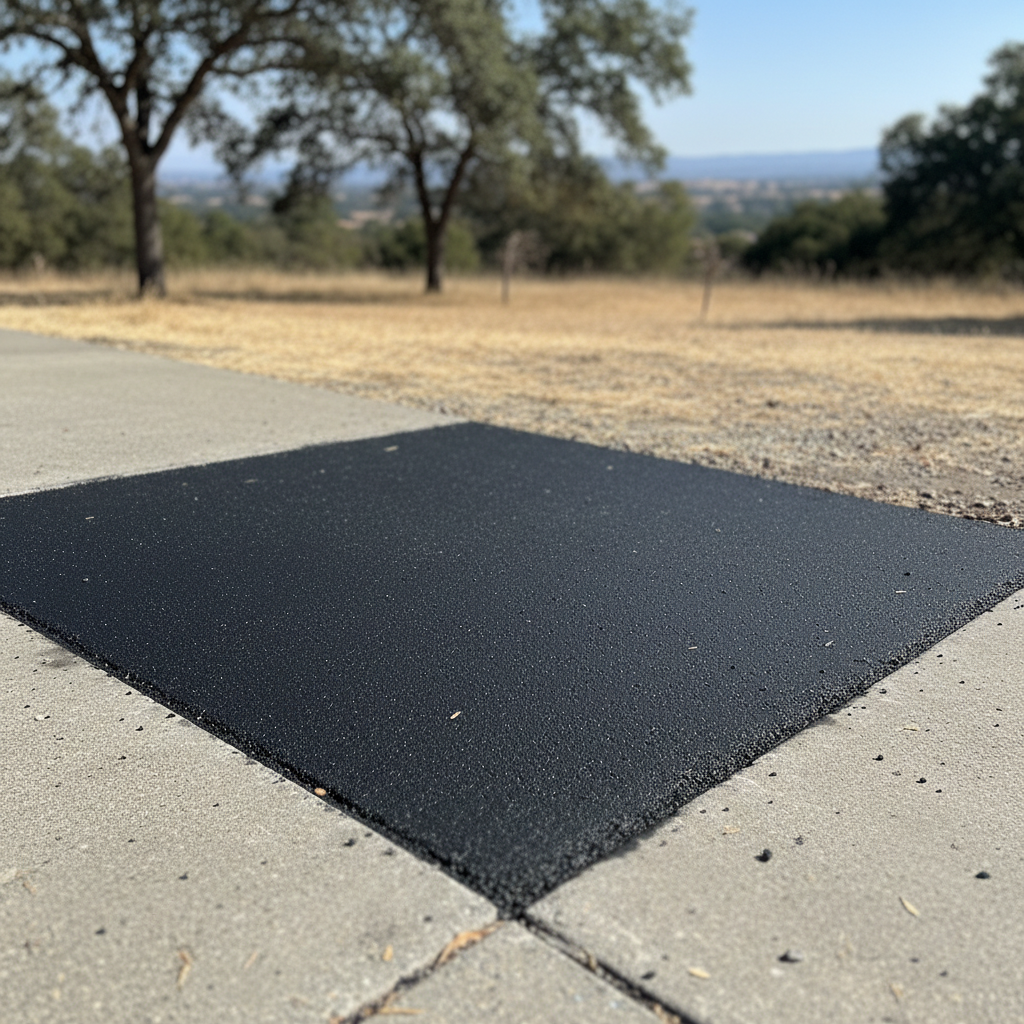
Property owners in Madera, CA often walk out to their driveway on a scorching July afternoon and notice a chunk of Asphalt completely crumbled under their foot. Between the blistering Central Valley heat and occasional heavy winter downpours out near Hensley Lake, local driveways take a very heavy beating. When damage starts showing up, Asphalt Patching is usually the first thing on the mind of local homeowners. Madera Diamond Asphalt answers the questions asked all the time by property owners across Madera County.
When is Asphalt Patching actually enough, and when do I need a total repave?
Asphalt Patching acts as a temporary fix for local damage. If a driveway has a couple of localized potholes or a localized alligator cracking spot where the base has failed in a small area, Asphalt Patching makes total sense. But if the whole driveway looks like a dry lake bed in August with interconnected cracks spanning the entire surface, Asphalt Patching will not save it. At Madera Diamond Asphalt, our team always tells property owners that if more than thirty or forty percent of the surface is failing, they are throwing money away by continuing to patch. Property owners should instead plan for an asphalt overlay or a complete tear-out.
Can I just grab a bag from the hardware store and patch it myself?
Property owners can purchase bags of cold mix from a local box store for a tiny, non-critical spot, which will get through a few months. However, that material never truly hardens up like hot-mix asphalt used in professional Asphalt Patching. The Madera sun turns cheap cold patch into sticky mush by August, and car tires will track the material all over the garage floor. If a property owner wants Asphalt Patching that actually bonds to the surrounding pavement and survives local temperature swings, the project requires proper equipment, a cleaned-out sub-base, and the right compaction.
How long should a professional asphalt patch actually last?
If Asphalt Patching is done right, meaning the damaged base is dug out, fresh aggregate is tamped down, and hot mix is properly compacted, a patch should easily last five to eight years, or 10 years or more in some cases. If a contractor just slaps hot mix over loose dirt and calls it a day, the Asphalt Patching will break apart the first time a heavy delivery truck backs onto the property. Quality prep work is very important for long-lasting Asphalt Patching in Madera, CA.
Why does my patch look like a different color than the rest of the driveway?
Fresh asphalt is jet black because of the liquid asphalt oil coating the stone. An existing driveway sitting under the Madera sun for years gets oxidized, bleached by UV rays, and worn down by traffic to a light gray. It is totally normal for new Asphalt Patching to stand out at first. Property owners can give the patch six months to a year to weather, or apply a sealcoat to the whole driveway to bring everything back to a uniform, rich dark color.
Is skin patching a waste of money?
Usually, skin patching is a waste of money. Skin patching involves laying a thin layer of asphalt right over a depression without cutting out the bad stuff first, which is a shortcut contractors use to cut corners. Because asphalt needs a certain minimum thickness to hold together under weight, a thin skin patch will crack, feather at the edges, and peel up within a single season. If a contractor suggests skin patching instead of proper Asphalt Patching, property owners should ask them why they are not doing a proper saw-cut patch instead.
How long do I have to keep my cars off a fresh patch?
The curing time for Asphalt Patching depends entirely on the temperature outside. In the dead of summer when it is 105 degrees out, asphalt takes much longer to cool down and cure fully. Generally, Madera Diamond Asphalt tells Madera homeowners to keep passenger vehicles off a fresh patch for at least twenty-four to forty-eight hours. Heavy trucks or RVs need a full three to five days. Driving on Asphalt Patching too early while the binder is still soft will leave deep tire ruts that ruin all the hard work.
What's the difference between surface patching and full-depth patching?
Surface patching just removes the top couple of inches of damaged pavement and replaces it. Full-depth Asphalt Patching goes all the way down through the base rock, fixes whatever soft or wet soil is causing the failure underneath, and rebuilds the whole structural section from the ground up. In the Madera, CA area, where expansive clay soils can shift when they get wet and dry out, full-depth Asphalt Patching is often the only way to stop a pothole from coming back in the exact same spot next year.